

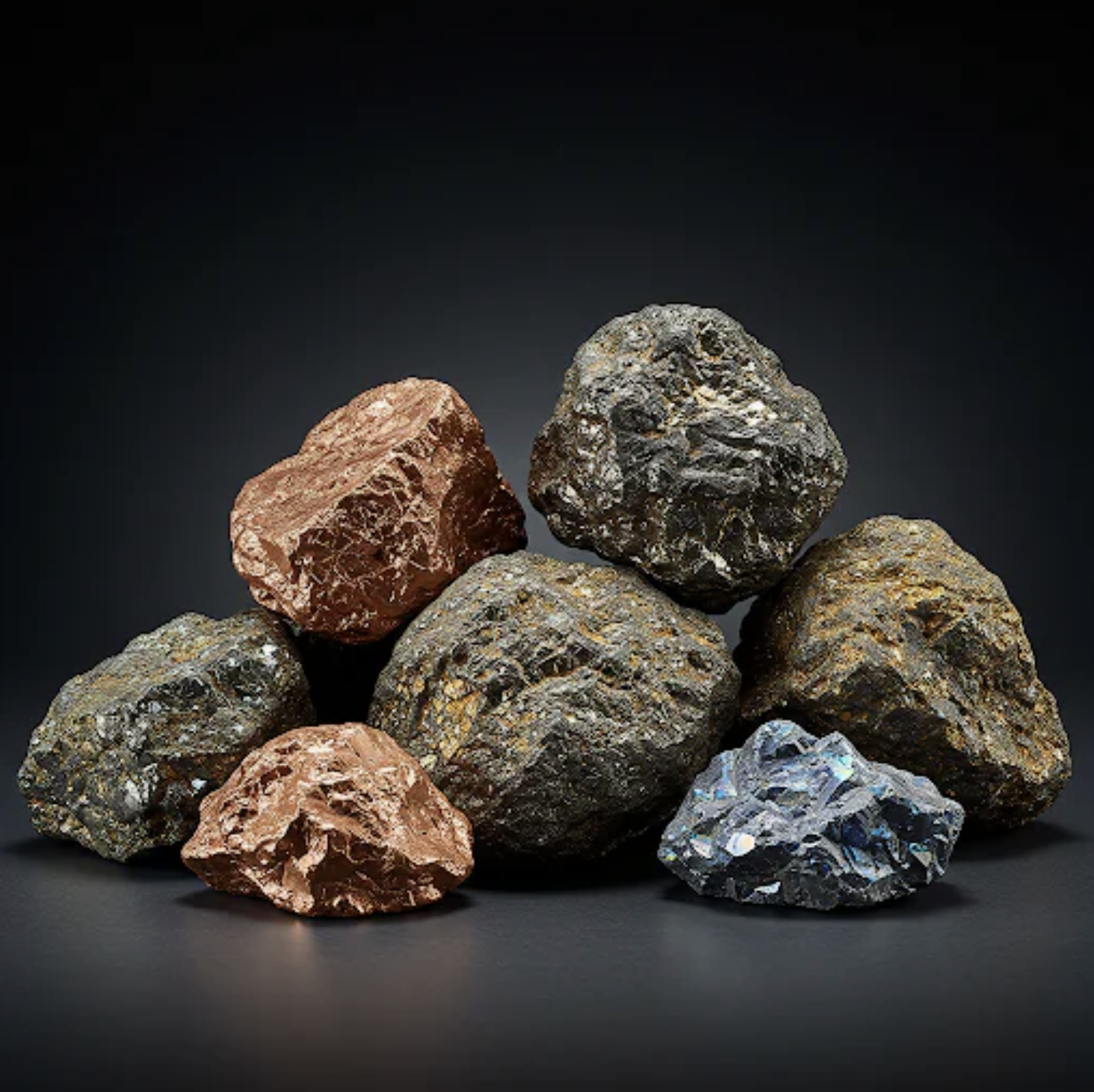
The energy expansion has a materials requirement. More power generation, transmission, data centers and manufacturing capacity also means more demand for the metals that make those systems work. Delivering those materials requires a chain of extraction, separation, refining and fabrication that turns resources into products manufacturers can use.
The scale and shape of that challenge vary by mineral. Copper is needed in large volumes across electrical infrastructure. Rare earths require specialized separation and manufacturing capabilities. Elements such as gallium are recovered in small quantities through much larger industrial processes. Across these markets, growing demand and geographically concentrated production are bringing renewed attention to how materials are sourced, processed and delivered.
At Energy Capital Ventures®, critical minerals are part of the expanded lens we have described alongside our Green Molecules® thesis. In Issue #99, “The Hardware Bottleneck in the Energy Expansion,” we examined the equipment constraints behind new power capacity. Here, we move a step further upstream: to the materials inside that equipment, and the technologies that turn resources into usable supply.
In this issue of the Green Molecules® Journal, we look at the critical materials behind the energy expansion, the challenges of bringing them to market, and the types of startups we are interested in backing to help meet that demand.
Each group of critical minerals perform different jobs across the energy system.
Copper carries electricity through wiring and cables and is used in equipment such as transformers and motors. Its conductivity makes it fundamental to electrical infrastructure.
Lithium is a key input to lithium-ion batteries used in electric vehicles and stationary storage. Graphite is a common anode material, storing lithium during charging.
Rare-earth elements (REE) such as neodymium and praseodymium help make powerful permanent magnets used in industrial motors, electric vehicles and some wind turbines. Dysprosium and terbium can improve magnet performance at higher temperatures.
Gallium is used in specialized semiconductors, including power electronics that convert and manage electricity. These components support computing, communications and industrial power systems.
The supply picture has two important dimensions: the volume of material available and the geography of the industries that produce it.
Copper illustrates the scale of future demand. The International Energy Agency projects that the announced project pipeline would leave copper supply approximately 25% below primary supply requirements in 2035 under its Stated Policies Scenario. That projection highlights the role additional projects, improved recovery, recycling and changes in material use could play over the coming decade.
Rare earths illustrate the concentration of processing capabilities. In 2024, China accounted for approximately 60% of mined production of magnet rare earths and 91% of refined output. Its position reflects an established industrial base spanning several stages of the supply chain.
For the United States, reshoring critical-mineral supply chains means developing the processing facilities, technical expertise and qualified supplier networks that connect resources to manufacturers. Building these capabilities at home, alongside partnerships with allies, can broaden sourcing options and reduce exposure to concentrated supply chains.
Extraction gets material out of a deposit or other feedstock. Processing and refining concentrate, separate and purify it. Downstream fabrication turns the resulting material into products such as magnets, battery materials or specialized components.
Each stage has its own equipment, technical requirements and customer specifications. The pace of development varies across them, shaping where additional capacity is needed. For rare earths, the IEA finds that announced refining and magnet-manufacturing capacity outside China trails the corresponding mining pipeline, creating a need for further downstream investment.
Gallium follows a different route. It is generally recovered as a byproduct of processing bauxite or zinc ores, linking its supply to larger aluminum and zinc industries. Recovery depends on the material’s concentration, the processing route and the equipment installed at the host facility. USGS’s 2026 summary reports no U.S. primary gallium recovery through 2025, continuing a gap dating to 1987. Domestic activity included refining imported gallium and recovering manufacturing scrap.
Alongside new resource development, companies are working to recover more material from existing operations, industrial byproducts and residues.
Freeport-McMoRan identified scaling its leaching initiative as part of its U.S. copper growth plans in its third-quarter 2026 operational update. Leaching uses chemical processes to dissolve metals from mineral material into a solution, from which they can then be recovered. Improvements can make additional material economically recoverable.
The opportunity also extends to elements that pass through established industrial processes without being recovered. USGS research examines how gallium, germanium, indium and other elements move through mining and metallurgical systems, including where they accumulate and how recovery could be improved.
Industrial streams can offer access to material within an existing operation. Their economics depend on concentration, impurities, reagent consumption and waste handling, as well as the reliability of feedstock supply.
At Energy Capital Ventures®, we are interested in startups developing the technologies that turn more of an available resource into a usable product. That includes extraction and leaching methods that improve recovery at existing operations; separation chemistry that isolates valuable elements from mixed feedstocks; and software that improves processing performance.
We are also following targeted opportunities in recycling and industrial-waste recovery, specialized processing equipment, and tools that improve geological data and resource characterization. Advances in downstream manufacturing, such as more efficient magnet-production processes, are another area of interest.
Mineral recovery also draws on capabilities developed across the energy industry.
In Issue #102, our Climate Week recap, we highlighted The Red Metal Company, an ECV portfolio company developing an approach to copper recovery at existing mine sites using horizontal drilling, engineered stimulation and reservoir modeling. These are tools familiar from shale and enhanced geothermal development, adapted to a different subsurface resource.
The connection extends to processing. Just as natural gas is treated to meet pipeline and customer requirements, recovered minerals are separated and refined to meet manufacturers’ specifications. Across both industries, the opportunity includes improving how resources are recovered, processed and delivered to customers.
